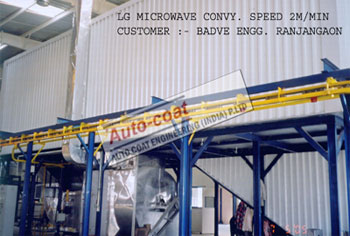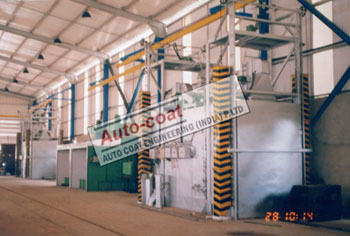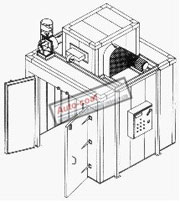
Paint Drying Ovens

Paint Drying Ovens: A Comprehensive Guide

The paint drying ovens function to speed up paint curing processes using industrial technology to treat coatings and adhesives on materials including metal, plastic, wood and ceramics. The drying ovens produce long-lasting and superior finishes by eliminating moisture and solvents while supporting chemical bonding essential for automotive, aerospace, furniture and fashion sectors. Our guide examines paint drying oven operations and classifications while discussing their advantages and practical applications with information from Cefla Finishing and DBM Tecnologie as well as standard industry practices.

What Are Paint Drying Ovens?

Paint drying ovens utilize precise heat management together with airflow and advanced technologies like UV or infrared to dry or cure coatings. Paint drying ovens evaporate water and solvents from paint finishes to harden surfaces which enhances final quality and cuts processing time compared to air drying methods. According to Cefla Finishing, drying ovens are designed to match both the coating type such as water-based coatings or solvent-based coatings and UV-curable coatings as well as powder coatings and the substrate material to achieve consistent outcomes.

Key components include:

  • Heating System: Taikisha USA's ovens use gas, electric, infrared, or steam power for maintaining exact temperatures between 50 and 350 degrees Celsius.
  • Air Circulation: Memmert USA states that fans enable consistent heat distribution through either natural convection or forced air methods.
  • Control Systems: DBM Tecnologie reports that PLCs and touchscreens serve to automate control of temperature settings, timing functions and airflow regulation.
  • Insulation: Encon highlights that rock wool and ceramic fiber materials reduce heat loss effectively.

How Paint Drying Ovens Work

Different paint types and their specific applications determine the drying or curing process.

  • Heating: Inside a chamber air gets heated through burners or electric coils to maintain continuous temperature control as described by Autocoatindia.
  • Solvent Evaporation: In solvent-based and water-based paints drying ovens work by evaporating liquids which accelerates the drying process. The specified temperature range for baking enamels in ovens is 120–200°C according to Model Engineer.
  • Curing: According to Memmert USA crosslinking in E-coat or powder coatings triggers chemical reactions that harden paint and establish a sturdy connection. Ultraviolet light technology in UV ovens applies to acrylic paints while excimer ovens produce deep matte finishes according to Cefla Finishing.
  • Cooling: HeatTek reports that defects such as bubbling are prevented through controlled cooling.
  • Exhaust Systems: Taikisha Ltd. recommends using thermal oxidizers to eliminate volatile organic compounds (VOCs) for safety compliance.

A 2025 X post from @BSHOPSOLUTIONS discusses how infrared rail systems in ovens can lead to quicker curing processes along with energy conservation.

Types of Paint Drying Ovens

  • Convection Ovens: Trimac Industrial Systems recommends convection ovens because their heated air circulation enables uniform drying which works well for liquid paints and powder coatings.
  • Infrared Ovens: Infrared ovens produce infrared waves for quick surface curing while decreasing energy consumption according to Autocoatindia.
  • UV Ovens: Cefla Finishing utilizes ultraviolet light to cure UV-sensitive paints while maintaining low energy consumption.
  • Excimer Ovens: Cefla Finishing recommends excimer lamps to achieve matte finishes on UV coatings.
  • Batch Ovens: Wisconsin Oven technology allows for the processing of small or varied loads which are frequently used in laboratory settings or small-scale production.
  • Continuous Ovens: Taikisha USA specifies the use of conveyors for high-volume production on automotive assembly lines.
  • Vacuum Ovens: Memmert USA recommends drying sensitive materials through the use of low temperature settings.

Benefits of Paint Drying Ovens

  • Faster Processing: Drying times in ovens decrease from hours down to minutes which results in increased production throughput. Research from DBM Tecnologie demonstrates that water-based paints dry more quickly when processed in ovens compared to air drying methods.
  • Enhanced Finish Quality: Memmert USA states that uniform heat eliminates orange peel defects while improving durability and resistance.
  • Energy Efficiency: Dürr reports that ovens equipped with insulation and heat recovery systems achieve 5–10% energy consumption reduction.
  • Versatility: DBM Tecnologie enables manufacturers to process various materials and coatings including automotive parts and eyewear.
  • Compliance and Safety: Taikisha Ltd confirms that VOC exhaust systems operate within environmental regulatory standards.

Applications

  • Automotive: Taikisha USA recommends curing E-coat primers and topcoats at 350°F.
  • Aerospace: HeatTek advises applying long-lasting coatings to composite components.
  • Furniture: Cefla Finishing specializes in dry wood finishing using both UV and water-based paints.
  • Fashion: DBM Tecnologie recommends applying treatments to footwear and handbag accessories.
  • Laboratories: Laboratory procedures require testing paint samples against curing standards established by Despatch.

Challenges and Solutions

  • High Initial Cost: Ovens range from $10,000–$100,000, per IndiaMart. Solution: Scalability demands modular equipment designs according to Dürr.
  • Maintenance: Cefla Finishing recommends consistent examination of conveyor tension in vertical ovens. Solution: Use low-maintenance static ovens for smaller setups.
  • Safety Risks: Solvent vapors pose explosion risks. Solution: Despatch advises using Class A ovens in combination with exhaust systems.

Why Paint Drying Ovens Matter in 2025

The expansion of global manufacturing combined with the prediction that 68% of the world population will live in urban areas by 2050 according to the UN leads to increased requirements for sustainable finishing processes. The reduction of VOC emissions and energy consumption through ovens supports the attainment of green objectives projected for 2025 according to Dürr. Industry discussions through X posts show a preference for quicker curing processes that are environmentally friendly.

Tips for Users

  • Choose the Right Oven: HeatTek advises aligning oven types with paint application needs and production size.
  • Maintain Regularly: Inspect insulation and fans to maintain operational efficiency according to Encon.
  • Monitor VOCs: Taikisha Ltd. advises using exhaust systems to comply with applicable regulations.

Conclusion

Across multiple industries paint drying ovens remain essential for producing durable and high-quality paint finishes. The combination of their speed, versatility and efficiency establishes paint drying ovens as essential tools because modern designs provide sustainability advantages. Cefla Finishing together with DBM Tecnologie support 2025 innovations to make sure the correct oven investment leads to both productivity and compliance. Start optimizing your finishing process today.