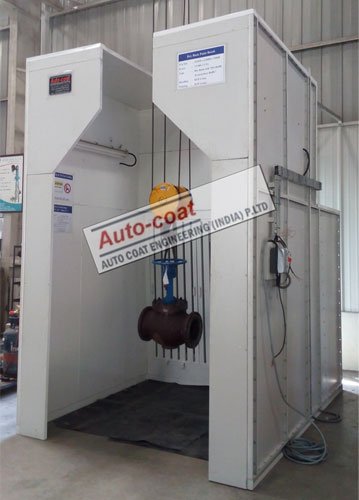
Dry Back Paint Booth

Dry Back Paint Booth: A Comprehensive Guide

Specialized dry back paint booths which are also called dry filter paint booths or dry type paint booths enclose spray painting areas to trap overspray and fumes to deliver clean and high-quality results. Dry back paint booths use dry filters instead of water to capture overspray which makes them both economical and eco-friendly when used for low to medium paint consumption tasks. This guide analyzes the operation of dry back paint booths and examines their advantages and various applications with information sourced from Autocoat Engineering and Cleantek along with industry standards.

What Is a Dry Back Paint Booth?

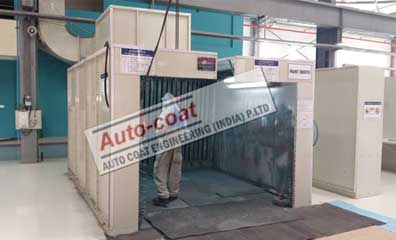
The enclosed workstation known as a dry back paint booth delivers a controlled environment for performing spray painting tasks. The booth utilizes a dry filter ventilation system to trap paint overspray along with volatile organic compounds (VOCs) and expels purified air to meet environmental standards. The dry back paint booths are designed for sectors such as automotive and aerospace which require less than 20 liters of paint per shift according to Autocoatindia. Per GBM Industries customers gain financial savings because of lower costs and reduced maintenance needs with these booths compared to water wash booths.

Key components include:

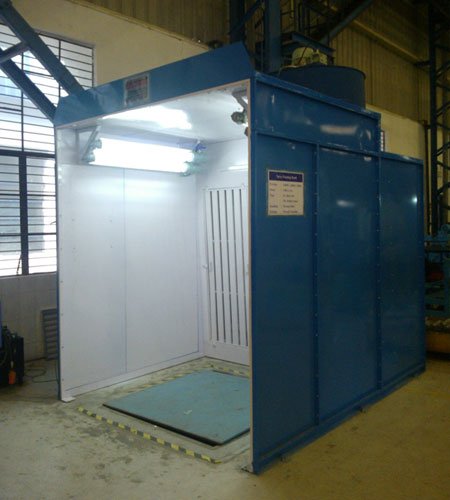
  • Booth Enclosure: Cleantekindia states that sealed workspaces are formed with fire-resistant materials like galvanized steel or EPS panels.
  • Ventilation System: Exhaust fans establish negative pressure to pull air through filters according to Anandimpex.
  • Filters: According to iXtract metallic baffles along with polyester and fiberglass filters and Andreae paper filters work to capture overspray.
  • Lighting: Smdcarbontower recommends using LED or fluorescent lights to achieve precise color application.
  • Controls: Per GBM Industries PLCs alongside push-button starters oversee both airflow regulation and safety management within the system.

How Dry Back Paint Booths Work

The operation of dry back paint booths depends on straightforward filtration mechanics.

  • Airflow: Exhaust fans generate negative pressure which draws ambient air through intake vents or ceiling filters into the booth according to instructions from Cleantekindia.
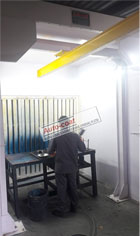
  • Overspray Capture: The airflow transports paint mist particles to filtration systems. Autocoat’s four-stage filtration system with cleanable metal baffles effectively captures overspray which minimizes filter clogging according to Autocoatindia.
  • Filtration: The booth uses filters made from materials like paper and fiberglass to capture paint particles before clean air exits through the exhaust ducts following environmental standards according to iXtract.
  • Exhaust: Smdcarbontower confirms that both VOCs and filtered air exit the system to maintain worker safety.

According to a 2023 Cleantekindia article dry booths follow Factories Act standards and maintain proper ventilation and fire protection.

Types of Dry Back Paint Booths

  • Cross-Draft Booths: Air movement in cross-draft booths runs horizontally between the front and back ends which makes this booth type cost-effective for painting automobiles and trucks according to Smdcarbontower.
  • Down-Draft Booths: In Down-Draft Booths air circulates vertically from the ceiling to the floor which makes it perfect for painting heavy parts like machinery while ensuring a superior finish quality according to Technosurfacecoatings.
  • Side-Draft Booths: Side walls pull air through the booth to achieve quick overspray removal according to Smdengineering.
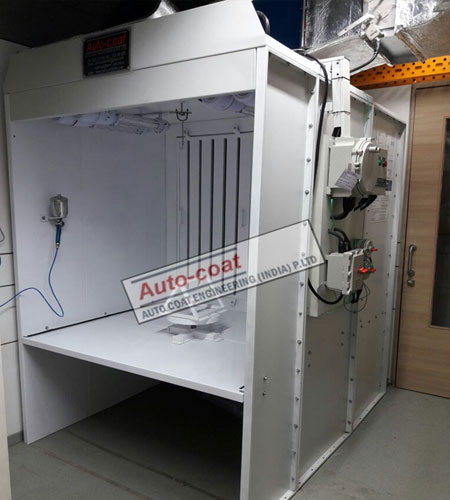
  • Bench Booths: Smdcarbontower recommends bench booths for small-scale and laboratory applications due to their compact design.
  • Conveyorized Booths: Autocoatindia describes these booths as automated systems designed for high-volume production which typically include drying ovens.

Benefits of Dry Back Paint Booths

  • Cost-Effective: Dry back paint booths offer reduced capital and maintenance expenses compared to water wash booths while eliminating water treatment requirements according to Autocoatindia. Autocoat's metallic baffles save costs by reducing filter replacements compared to disposable filters from competitors that become clogged after 1–2 weeks at a 20 liters/shift rate.
  • Environmental Compliance: Advanced filtration technology achieves particulate matter standards while used filters undergo disposal with ETP agents according to Autocoatindia.
  • Worker Safety: A proper ventilation system decreases workers' exposure to fumes and leads to healthier work environments according to Cleantekindia.
  • High-Quality Finishes: Anandimpex reports that controlled airflow eliminates contaminants to produce even coatings.
  • Ease of Maintenance: GBM Industries states that their modular structures and easy-to-clean baffles make maintenance straightforward.

Applications

  • Automotive: Smdengineering specializes in painting automobiles and trucks as well as parts while maintaining minimal paint volumes.
  • Product Development: Neelindustries provides specialized lab booths that test paint samples.
  • Industrial: GBM Industries specializes in coating pumps and motors as well as large equipment including transformers.
  • Woodworking: Sbispraybooth specializes in applying PU finishes and air-drying paints to furniture pieces.
  • Aerospace: Precision coating for small parts, per Technosurfacecoatings.

Challenges and Solutions

  • Filter Clogging: Disposable filters choke quickly, increasing costs. Solution: Autocoatindia recommends utilizing their 4-level filtration system which features cleanable baffles.
  • Fire Risk: Solvent vapors are hazardous. Solution: The fire risk posed by solvent vapors can be managed by installing flame-proof motors together with fire suppression systems according to GBM Industries.
  • Limited for High Paint Volumes: Less effective above 20 liters/shift. Solution: Autocoatindia recommends using water wash booths to support mass production operations.

Understanding the importance of dry back paint booths becomes essential in 2025 due to changing industry needs.

As manufacturing grows worldwide and urban populations are expected to hit 68% by 2050 according to UN projections, the need for eco-friendly and efficient painting technologies increases. Dry back booths support the sustainability goals set for 2025 by allowing businesses to minimize water use and maintenance needs according to Cleantekindia. The posts from X in 2025 demonstrate their cost-effectiveness for small businesses which mirrors current industry patterns.

Tips for Users

  • Select the Right Booth: Select a booth type suitable for your specific needs such as down-draft booths for heavy parts while considering paint consumption and product size based on Smdcarbontower advice.
  • Maintain Filters: Users must maintain their equipment by cleaning metallic baffles routinely and replacing paper filters when necessary according to iXtract's guidelines.
  • Ensure Safety: Per Cleantekindia, it's essential to operate with flame-resistant devices while following ventilation regulations.
  • Consult Experts: Seek industry expertise when creating personalized solutions by partnering with Autocoat as recommended by Autocoatindia.

Conclusion

Back paint booths provide an economical way to spray paint that benefits the environment while producing superior finishes with minimal upkeep. Their ability to serve multiple functions and meet compliance requirements makes them perfect for use in automotive environments as well as industrial and laboratory settings. The support of Autocoatindia and Cleantekindia together with 2025 innovations make these booths the best option for effective painting. Start optimizing your painting process today.