
Rail coach painting sits in its own category of industrial finishing — coaches are 20 – 25 metres long, must survive 25 – 35 years of outdoor exposure, and carry passengers who need fire-retardant interiors. This guide covers everything Indian coach factories, metro OEMs and rolling-stock manufacturers need to know about specifying a rail coach paint booth, based on Autocoat's engineering work for Alstom and rail sector clients.
📋 What You'll Learn
1. Rail Coach Paint Booth Sizing
The single biggest engineering decision is booth dimension — get it wrong and you either waste floor space or can't fit the coach.
Standard ICF/LHB Coach Booth
25 m length × 5 m width × 5 m height internal cabin — accommodates 23 – 24 m coach body plus clearance for roll-up doors and painter walk-around access.
Metro Coach Booth
23 m length × 4.5 m width × 4.5 m height — standard metro car is ~22 m, marginally smaller than mainline coaches.
Wagon / Freight Booth
15 – 18 m length — shorter rolling stock needs proportionally smaller booths, saving significant capex.
Add 1 – 1.5 m clearance at each end for painter walk-around and door operation. Use our paint booth size calculator for a customised estimate.
2. Airflow & Ventilation Requirements
A coach exterior is 150 – 200 sq m of surface area — roughly 8 – 10× a car. Airflow design must scale accordingly:
- Total exhaust volume — 40,000 – 100,000 CFM depending on booth size
- Downdraft velocity — 0.3 – 0.4 m/s at coach body surface (same standard as automotive downdraft)
- Supply filtration — F7 minimum, F9 for premium metro finishes
- Fan redundancy — multiple 15 – 30 HP fans rather than one large fan, so a single failure doesn't stop production
- Heated makeup air — essential for northern India coach factories in winter
3. Indian Railway Coach Paint Specification (RDSO)
| Area | Coating System | Requirement |
|---|---|---|
| Exterior body | 2-pack PU topcoat over epoxy zinc-rich primer | DFT 120 – 150 microns |
| Underframe & bogie | CARC or heavy-duty epoxy | 500 – 1000 hr salt-spray |
| Interior (passenger area) | Fire-retardant paint | RDSO / EN 45545 compliant |
| Metro exterior | PU + graffiti-resistant clearcoat | DFT 130 – 160 microns |
With a 25 – 35 year service life expectation, coach paint film builds are 2 – 3× heavier than automotive, and salt-spray targets are correspondingly higher.
4. Coach vs Automotive Painting — Key Differences
| Factor | Automotive | Rail Coach |
|---|---|---|
| Length | 4 – 5 m | 20 – 25 m |
| Service life | 10 – 15 years | 25 – 35 years |
| Fire safety | Not required | EN 45545 / RDSO mandatory |
| Operator access | Standing/walking | Elevated platforms & gantries |
| Annual volume | 1,000s – millions | 20 – 100 units/year |
| Automation level | Fully robotic | Semi-automated preferred |
5. Cost Breakdown for Rail Coach Paint Booths 2026
| Configuration | Price Range (INR) |
|---|---|
| Basic downdraft coach booth (25 m) | ₹80 lakh – 1.5 crore |
| Coach booth + integrated bake oven | ₹1.5 – 2.5 crore |
| Automated line + pretreatment tunnel | ₹3 – 6 crore |
| Full coach factory paint shop (CED e-coat, robotic) | ₹8 – 20 crore |
Pricing scales with automation and pretreatment scope — see our pretreatment plant guide for the phosphating stage of a full paint shop.
6. Metro Coach Painting Considerations
Metro rolling stock has specific requirements beyond mainline coaches:
- Graffiti-resistant clearcoat — sacrificial layer that allows easy cleaning without damaging base colour
- Faster turnaround — metro fleets often need overnight touch-up capacity, favouring quick-cure PU or waterborne systems
- Branding livery — multi-colour schemes require masking stations and colour-change capability
- Depot-based painting — many metro operators paint in-house at depots rather than centralised factories, needing compact but full-spec booths
7. Autocoat's Rail Sector Experience
Autocoat Engineering has designed rail carriage spray booths for Alstom India (confirmed client) and has engineering experience aligned with Indian Railways coach factory specifications (ICF Chennai, RCF Kapurthala, MCF Raebareli type requirements). Our rail coach booths feature:
- Downdraft airflow for full-coach dust-free finishing
- Integrated bake oven for cure cycle
- Large roll-up doors for coach ingress/egress
- Painter walk-around platforms for full-coach access
- Custom airflow calculations per coach dimension and paint chemistry
Planning a Rail Coach or Metro Paint Shop?
Send us your coach dimensions, production volume and paint specification — Autocoat's engineers will prepare a customised booth layout and budget quote.
Get Free Quote →Frequently Asked Questions
What size paint booth is needed for a rail coach?
25 m × 5 m × 5 m for standard ICF/LHB coaches, 23 m × 4.5 m × 4.5 m for metro coaches. Add 1 – 1.5 m clearance at each end.
How much does a rail coach paint booth cost in India 2026?
Basic downdraft booth ₹80 lakh – 1.5 crore; with bake oven ₹1.5 – 2.5 crore; automated line ₹3 – 6 crore; full factory paint shop ₹8 – 20 crore.
What paint specification is used for Indian railway coaches?
2-pack PU topcoat over epoxy zinc-rich primer (120 – 150 micron DFT), CARC/heavy-duty epoxy for underframe, fire-retardant paint per RDSO/EN 45545 for interiors.
What is the difference between coach painting and automotive painting?
Coaches are 20 – 25 m vs 4 – 5 m, last 25 – 35 years vs 10 – 15, require fire-retardant interiors, need elevated access platforms, and run lower volume with semi-automation.
Does Autocoat supply paint booths for Indian Railways and Metro?
Yes — Autocoat has designed rail carriage spray booths for Alstom and has engineering experience aligned with ICF/RCF/MCF specifications. Contact +91-9322508192.
What airflow is required for a coach paint booth?
40,000 – 100,000 CFM exhaust, 0.3 – 0.4 m/s downdraft velocity, F7 – F9 supply filtration, multiple redundant fans, heated makeup air for winter.
What is CARC coating and is it used on rail coaches?
Chemical Agent Resistant Coating — originally military. On coaches it's occasionally used on underframe/bogie for corrosion resistance. Standard exteriors use conventional PU. See our CARC & military paint booth guide.
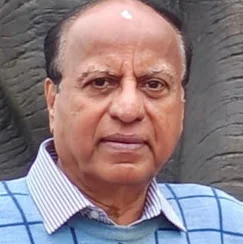
About the Author
Umesh Prabhu — Founder & Managing Director, Autocoat Engineering India Pvt Ltd
Umesh Prabhu is a mechanical engineer, industrial consultant, and founder of Autocoat Engineering India Private Limited. With over 40 years of experience in industrial painting and surface finishing, he specializes in industrial paint shops, powder coating systems, automated painting solutions, paint booths, and energy-efficient plant design. His industry experience includes working with leading automotive and manufacturing companies such as Tata Motors and Bajaj Auto.
Connect on LinkedIn